Community Seed Banks: Preserving Heritage, Ensuring Food Security
In a small storage building in Obantoko community, something remarkable is taking root. Rows of carefully labeled containers hold seeds of cassava, yam, maize, and vegetables, each variety documented with its characteristics, planting requirements, and history. This is one of five community seed banks established by GAIN Nigeria Rural across Odeda Local Government Area, and it represents a quiet revolution in how rural communities ensure their food security.
The Seed Crisis
For years, smallholder farmers in rural Nigeria have struggled with a persistent problem: access to quality planting materials. Commercial seed companies focus on urban markets and large-scale farmers, leaving rural communities to rely on saved seeds that gradually lose vigor and disease resistance.
"Every year, our cassava yields got a little worse," recalls Biodun Oladipo, a farmer from Obantoko. "We were planting stems from our own fields, but we didn't know they were carrying diseases. We thought it was just bad luck or poor soil."
The problem extended beyond cassava. Improved maize varieties disappeared from local markets after a few seasons. Traditional yam varieties, perfectly adapted to local conditions but lower-yielding than modern types, were being lost as farmers sought higher productivity.
A Community-Based Solution
GAIN's seed bank program takes a different approach. Rather than creating dependency on external seed suppliers, it builds community capacity to produce, store, and distribute quality planting materials.
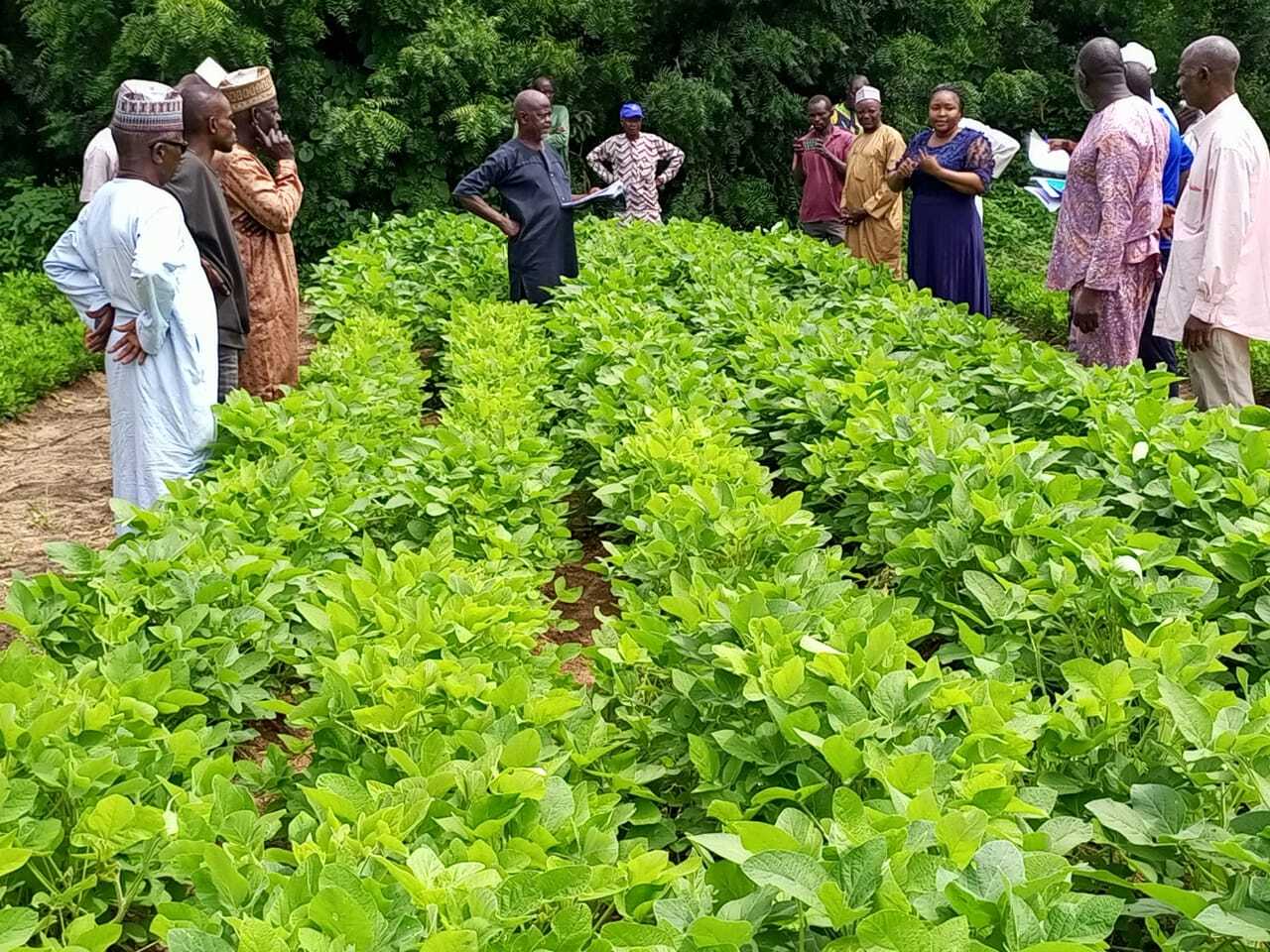
Each seed bank is managed by a committee of trained farmers who understand seed selection, storage, and distribution. GAIN provides initial foundation seed of improved varieties, training in seed production techniques, and storage facilities. The community provides labor, local knowledge, and commitment to maintaining the system.
"We're not just storing seeds," explains Yetunde Akinola, chairperson of the Obantoko seed bank committee. "We're preserving our agricultural heritage while embracing improved varieties that can help us produce more food."
How the System Works
The seed bank operates on a simple but effective model. Farmers can "borrow" planting materials at the beginning of the season, paying a nominal fee that covers storage and management costs. After harvest, they return an agreed-upon quantity of seeds or stems, plus a small surplus.
This surplus serves multiple purposes. It replenishes the seed bank's stock, provides planting material for new members, and can be sold to generate income for the seed bank's operations.
For cassava, the system is particularly innovative. Selected farmers, trained in proper stem cutting and storage techniques, maintain multiplication plots specifically for producing disease-free planting material. These "seed producers" receive premium prices for their stems, creating an incentive for quality production.
Preserving Traditional Varieties
While improved varieties are important, the seed banks also preserve traditional varieties that might otherwise be lost. These local varieties often have characteristics that modern varieties lack: specific cooking qualities, cultural significance, or adaptation to particular soil types.
The Obantoko seed bank maintains three traditional cassava varieties alongside four improved types. Farmers can choose based on their needs and preferences.
"My grandmother grew a particular yam variety that made the best pounded yam," says Taiwo Adeleke, a seed bank member. "It wasn't the highest yielding, but the taste was incomparable. That variety had almost disappeared until the seed bank started maintaining it. Now my children can taste the same yam their great-grandmother grew."
Training and Knowledge Transfer
The seed banks serve as more than storage facilities. They are learning centers where farmers share knowledge about seed selection, storage, and crop management.
Monthly meetings at the seed bank include training sessions on topics like identifying disease-free planting material, proper storage techniques, and maintaining seed purity. Experienced farmers mentor newer members, creating a system of peer-to-peer knowledge transfer.
"I learned more about cassava in six months at the seed bank than in 20 years of farming," admits Kunle Adeyemi, a farmer from Alagbede community. "I didn't know you should select stems from healthy, high-yielding plants. I just cut whatever was convenient. No wonder my yields were poor."
Economic Impact
The economic benefits of the seed banks extend beyond improved yields. By producing quality planting materials locally, communities reduce their dependence on external suppliers and keep money circulating within the local economy.
Farmers who purchase stems from the seed bank report yield increases of 30 to 50% compared to using their own saved materials. For a two-hectare cassava farm, this translates to an additional 4 to 6 tons of cassava, worth ₦160,000 to ₦240,000 at current prices.
The seed banks themselves generate modest income through membership fees and sales of surplus planting materials. This income supports operations and provides small stipends for committee members who invest significant time in management.
Challenges and Adaptations
The system is not without challenges. Storage facilities require maintenance and occasional repairs. Managing the loan and return system demands careful record-keeping. Ensuring that returned materials meet quality standards requires vigilance.
Some farmers initially resisted the idea of "paying" for planting materials they had always obtained freely from their own fields. Education about the value of quality seed and the costs of maintaining the system has gradually overcome this resistance.
Weather events pose risks. A severe drought or flood that damages multiplication plots can threaten the seed bank's stock. To mitigate this risk, GAIN helps seed banks maintain relationships with seed banks in other communities, allowing them to replenish stock if necessary.
Scaling Up
The success of the initial five seed banks has generated interest across Ogun State. GAIN is working with the State Ministry of Agriculture to establish 20 additional seed banks over the next two years.
"What we're building is a network," explains Tosin Ajala of GAIN Nigeria Rural. "Seed banks in different communities can exchange materials, share knowledge, and support each other. This creates resilience and ensures that no single community is vulnerable to seed shortages."
There are also plans to expand beyond cassava and yam. Vegetable seed production, particularly for tomatoes, peppers, and leafy greens, is being piloted in three communities. These crops have shorter production cycles and higher profit margins, making them attractive for seed bank operations.
A Model for Food Security
The community seed bank model addresses multiple dimensions of food security simultaneously. It ensures access to quality planting materials, preserves agricultural biodiversity, builds local capacity, and creates economic opportunities.
Perhaps most importantly, it puts control in the hands of communities themselves. Rather than depending on distant seed companies or government programs, communities have the tools and knowledge to ensure their own food security.
"This is about more than seeds," reflects Yetunde Akinola, gazing at the neatly organized storage containers in the Obantoko seed bank. "It's about taking control of our future. When we control our seeds, we control our food supply. That's real power."
As climate change brings increasing uncertainty to agricultural production, the importance of resilient, community-based systems like seed banks will only grow. The seeds stored in these modest buildings represent not just next season's crops, but hope for a food-secure future for rural Nigeria.
Communities interested in establishing seed banks can contact GAIN Nigeria Rural for training and technical support. The seeds of change are ready to be planted.
Adewale Adeosun
Contributing Writer
Adewale Adeosun is a contributing writer for GAIN Nigeria Rural, specializing in agricultural development, community empowerment, and sustainable farming practices in rural Nigeria.